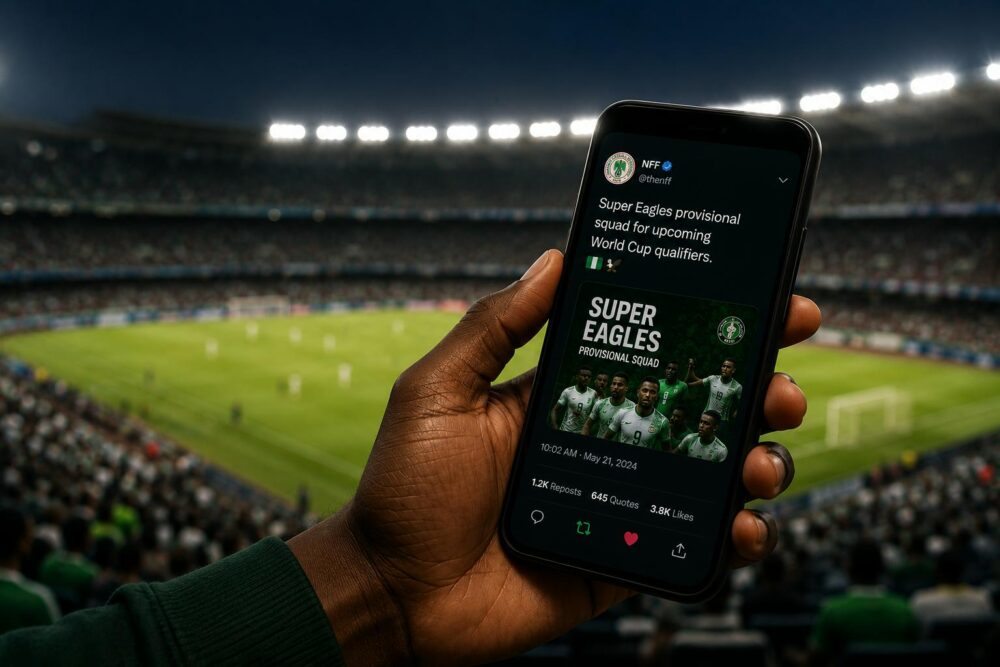
A Super Eagles squad announcement once waited for the morning papers. Today, the story often breaks on X before traditional outlets finish drafting their lead paragraphs — and the reaction arrives even faster. Editors and reporters covering Nigeria sport news now treat social platforms as primary sources, not secondary add-ons. That shift has changed how Nigeria football is reported, debated, and consumed across the country.
How Social Platforms Reshaped Nigeria Football Coverage
Nigeria football coverage no longer flows through a single gatekeeper. The Nigeria Football Federation publishes updates through its official website, NFF TV, and accounts such as @thenff and @NGSuperEagles, while clubs, agents, and journalists post in parallel on X, Instagram, Facebook, and WhatsApp groups.
According to FIFA’s official Nigeria association profile, the NFF lists a dedicated Media And Communication Manager within its organisation — a sign that federation messaging is now a structured communications function, not an afterthought.
Social platforms changed sports media in three practical ways:
- Speed — line-ups, injuries, and federation statements circulate within minutes
- Access — fans read coach quotes, training clips, and press conference clips directly
- Volume — every match spawns multiple narratives across competing accounts
When Eric Chelle released his first Super Eagles provisional list, debate exploded online within hours — praise, criticism, and squad-selection arguments spread before broadcast bulletins aired. That pattern repeats across Nigeria Premier Football League fixtures, Super Falcons camps, and transfer windows involving Nigerian players abroad.
Breaking News and the New Speed of Sports Media
Breaking news in Nigerian sports media now follows a social-first workflow. A journalist monitors federation accounts, player posts, and verified league handles, then confirms details before publishing. The audience, meanwhile, often sees the raw update first.
The NFF itself markets real-time coverage through its official digital channels, including NFF TV, live web streams, and mobile app access for matches. Traditional outlets increasingly repackage that material — screenshots, embedded posts, and clip threads — rather than relying solely on post-match press rooms.
A typical breaking news cycle looks like this:
- Primary post — federation, club, or player account publishes an update
- Amplification — sports media accounts quote, translate, or analyse the post
- Fan reaction — comments, hashtags, and quote-posts shape the headline angle
- Follow-up — interviews and explainers arrive hours later on radio, TV, or web
That cycle compresses timelines. It also raises verification pressure: unconfirmed transfer rumours and fake squad lists can trend before anyone checks the source.
Fan Engagement Beyond the Full-Time Whistle
Fan engagement is now continuous. Supporters do not simply read match reports — they participate in live threads during Nigeria football qualifiers, rate selections, and pressure federations when results disappoint.
After Nigeria’s 1-1 World Cup qualifier draw with South Africa in Bloemfontein, social platforms carried immediate tactical criticism of Chelle’s first-half approach, captaincy decisions, and squad choices. Similar waves followed the Super Eagles’ World Cup qualification exit, when online campaigns and reform hashtags moved from fan forums into mainstream sports media coverage.
Fan engagement tools now include:
- Live match threads on X during Super Eagles and club fixtures
- Short-form video — goals, errors, and celebrations clipped within seconds
- Community groups — WhatsApp and Telegram channels sharing line-ups and links
- Direct federation interaction — supporters replying to NFF and Super Eagles posts
Engagement increases reach, but it also intensifies scrutiny. Federation apologies, coach selections, and payment disputes now play out in public view, with sports media quoting social reaction as part of the story itself.
What Sports Media Gains — and Loses
The benefits for sports media are clear: faster distribution, richer multimedia, and closer connection to Nigeria football audiences. A reporter in Lagos can cover a Kaduna United fixture through live updates without being at the ground. A diaspora fan can follow Super Falcons friendlies through federation streams and social clips.
The risks are equally real:
- Misinformation spreads when unverified accounts mimic official branding
- Context collapse reduces complex federation decisions to viral screenshots
- Attention bias favours controversy over development stories from grassroots football
Professional sports media still matters because verification, interviews, and long-form analysis differentiate reporting from rumour. The best outlets now blend social speed with editorial standards — confirming NFF statements, cross-checking agent claims, and labelling speculation clearly.
Social media has changed Nigerian sports journalism from a scheduled broadcast model into a live, participatory conversation. Social platforms deliver breaking news faster, sports media adapts by sourcing and verifying in real time, and fan engagement shapes how Nigeria football stories are framed. The technology will keep evolving; the demand for accurate, fast, and accountable coverage will not.