
Introduction: A New Continental Wave
African music is no longer divided by borders, and the evidence is everywhere, from Spotify’s Today’s Top Hits to the packed arenas of Europe and North America. In the past decade, the invisible walls that once separated West Africa’s Afrobeats empire from South Africa’s kaleidoscopic ecosystem of amapiano, deep house, gqom, kwaito, and Afro-soul have come crashing down. What began as polite nods across the continent, occasional remixes or festival co-headlining slots has evolved into a deliberate, high-stakes strategy of unity. South African producers, singers, and rappers are now in constant creative conversation with Afrobeats giants such as Burna Boy, Wizkid, Davido, Rema, Asake, Ayra Starr, Tems, and Omah Lay. The result is a powerful, cross-pollinated sound that fuses the log drums and jazz-tinged chords of amapiano with the melodic swagger, pidgin lyricism, and percussive bounce of Afrobeats, creating something that feels both deeply rooted and thrillingly new.
These collaborations are far more than the casual “feature” culture of old; they are calculated, movement-shaping partnerships engineered for global conquest. When Major League DJz brought Davido into the Scorpion Kings studio for Dinaledi or when Kabza De Small and DJ Maphorisa handed the mic to the Nigerian superstar for the pulsating Sponono, the outcome was explosive: billions of collective streams, instant viral dances, and a clear message that African artists no longer need Western validation to dominate. The same blueprint powered Focalistic and Davido’s Ke Star (Remix), a record that became a continental anthem and propelled the Gauteng-born rapper onto stages from Miami to Lisbon. Even before his untimely death, AKA was bridging the gap with tracks alongside Nasty C and Nigerian heavyweights, while posthumous releases continue to underscore his role as a pioneer of this pan-African vision. Each of these records functions as both art and strategy, an audible declaration that collaboration is now the most efficient path to worldwide African supremacy.
The magic happens because the genres were always destined to meet halfway. Amapiano’s hypnotic rolling basslines, shimmering percussion, and soulful piano riffs create the perfect canvas for Afrobeats’ infectious hooks and rhythmic vocal cadences. South African rappers like Nasty C, A-Reece, Cassper Nyovest, Emtee, and Blxckie deliver razor-sharp verses in English, Zulu, Setswana, or street slang that cut through the melody with surgical precision, offering a counterpoint to the sing-song flows of Wizkid, Joeboy, or Fireboy DML. Meanwhile, South African vocal powerhouses—Sha Sha, Simmy, Ami Faku, Sun-EL Musician, and the new generation led by Tyla—bring layered harmonies and emotional depth that have become indispensable in contemporary Afrobeats production. When Tyla’s Water seamlessly blended amapiano sensibility with global pop appeal and then attracted remixes from Travis Scott, the circle felt complete: South Africa was no longer just contributing; it was co-authoring the future of African pop.
Streaming platforms, social media algorithms, and a new generation of African-owned labels have supercharged this unification at lightning speed. A single 15-second clip of an Uncle Waffles and Rema collaboration or a Kelvin Momo and Omah Lay link-up can ignite dance challenges from Cape Town to Cotonou, rack up hundreds of millions of views, and propel both artists into previously unreachable markets. Major labels like Sony, Warner, and Universal now treat South Africa–Nigeria projects as priority releases, while independents such as Piano Hub, Aristokrat, and Mavin Global actively broker these connections. Live, the momentum is even more palpable: festivals such as AfroNation Portugal, AfroChella (now AfroFuture), One Africa Music Fest, and the newly expanded Delicious Festival have become diplomatic summits where these alliances are performed in real time before tens of thousands of screaming fans, many of whom travelled across continents to witness the pan-African dream made flesh.
Ultimately, this wave of South African–Afrobeats collaborations represents far more than a string of hit records; it is the soundtrack of a continent consciously choosing unity over fragmentation. By weaving together the infectious groove of Lagos and Accra with the harmonic richness and rhythmic innovation of Johannesburg, Pretoria, and Durban, these artists are erasing old regional rivalries and crafting a truly pan-African popular music, one that speaks with multiple accents yet moves as a single body. What we are hearing is not just the future of African music; it is the present, already dominating global charts, dance floors, and imaginations. The rest of the world is no longer being introduced to African sounds one country at a time; it is learning to move to a unified African rhythm, and South African artists, hand in hand with their Afrobeats counterparts, are leading the dance.
The Rise of Cross-Continental Collaborations
Over the last five years, African audiences have undergone a quiet but seismic shift: the fierce regional loyalty that once policed playlists—“this is Naija only,” “this is Mzansi only”—has melted away, replaced by an insatiable appetite for hybrid sounds that feel like home no matter where home is. Younger listeners, raised on Spotify’s borderless algorithms and TikTok’s cross-continental dance challenges, no longer see genre or geography as barriers; they see possibilities. This openness has become the fertile soil in which cross-continental collaborations now flourish. Where a decade ago a South African house record featuring a Nigerian vocalist might have been dismissed as “trying too hard,” today it is celebrated as the new normal. From the clubs of Accra to the taverns of Soweto, the same crowds that once guarded their local sounds now demand the fusion, creating a feedback loop that rewards artists brave enough to cross the old lines.
This new hunger has produced an explosion of deliberate stylistic marriages, each one more audacious than the last. Amapiano’s rolling log drums and jazz-kissed chords have become the perfect foundation for Afrobeats’ melodic swagger, birthing monsters like Davido and Focalistic’s Champion Sound, Uncle Waffles and Pabi Cooper’s remix of Tanzania with Nigerian flair, or the endless stream of Asake-meets-Kabza De Small edits blowing up on continent-wide parties. Meanwhile, South African hip-hop’s razor-sharp lyricism and booming 808s have found soulmates in Afro-fusion’s introspective melodies—think Nasty C trading bars with Fireboy DML, or Blxckie and A-Reece sliding over Burna Boy-style horn sections. Beyond that, pure dance music experiments have emerged: Black Coffee layering Afrohouse synths over West African percussion, Major League DJz inviting Ghanaian highlife guitar into their sets, or Tyla and Ayra Starr turning kwaito bounce into shimmering global pop. Every combination feels less like a compromise and more like a discovery, as if the continent’s musical DNA is finally being allowed to recombine after centuries apart.
The result is a dazzling new class of pan-African anthems that belong to no single city yet live in every one. Tracks like Ke Star (Remix), Love You Tonight by Sha Sha and Burna Boy, Water by Tyla with its global remix army, or the unstoppable Soweto by Victony and Tempoe featuring South African log drums have racked up billions of streams, soundtracked weddings from Cape Town to Kano, and turned festival stages in London, Lisbon, and New York into continental reunions. These songs do not ask listeners to choose between Lagos and Johannesburg; they simply play both frequencies at once, and the world dances in unison. What began as curiosity has become infrastructure: a shared sonic passport that lets African artists travel farther, earn more, and speak louder than ever before, proving that when the continent’s creators decide to move together, the playlists of the planet have no choice but to follow.
Burna Boy and The SA Wave: Amapiano, Hip-Hop & House Influence
Few African artists have embraced South Africa’s sonic universe as wholeheartedly as Burna Boy. From the moment he first touched Mzansi soil, the self-styled African Giant has moved like a student-turned-collaborator, soaking up amapiano’s log-drum pulse, trading bars with local rap kings, and letting the country’s legendary house pioneers reshape his sound. What started with club appearances alongside Black Coffee and casual studio sessions has evolved into a deep, ongoing love affair: Burna Boy doesn’t just feature South African talent; he lets amapiano, hip-hop, and Afrohouse rewrite his musical DNA, producing some of the most electrifying pan-African records of the decade.
1. Yaba Buluku and Jerusalema (Remix) – The Spark That Lit the Continent
When DJ Tárico and Preck dropped the original Yaba Buluku in late 2020, the Mozambican gqom-amapiano hybrid was already bubbling in southern Africa, riding the same pandemic-era wave that had turned Master KG and Nomcebo Zikode’s Jerusalema into the first true amapiano global phenomenon just months earlier. That Jerusalema remix featuring Burna Boy himself—released in mid-2020 and quickly becoming the most-watched African music video of all time—had already primed the planet for South Africa’s log-drum revolution. So when Burna returned in early 2021 with his swaggering, Pidgin-laced verse on the official Yaba Buluku remix, the detonation felt almost inevitable. Overnight, a song from Maputo became the second amapiano-leaning juggernaut to cross a billion TikTok views and storm Spotify’s Global Top 50, cementing the genre’s passport as valid. South African ears heard something familiar yet elevated; the same rolling bass and percussive swing that had carried Jerusalema from Limpopo to Paris were now carrying the voice of Africa’s biggest star once again. That one-two punch—Jerusalema followed by Yaba Buluku—functioned as a continental announcement: amapiano was ready for the world stage, and Burna Boy was willing to be its loudest, most consistent ambassador. The ripple effect was immediate: Uncle Waffles, Vigro Deep, and countless bedroom producers from Gauteng to Luanda saw their SoundCloud uploads flooded with new listeners who had arrived via Burna’s now-proven co-sign.
2. The Scorpion Kings Alliance – Maphorisa, Kabza, and the African Giant
If Yaba Buluku was the spark, Burna Boy’s repeated studio sessions with Kabza De Small and DJ Maphorisa were the gasoline. From the sultry, late-night pulse of Sponono (2020) to the festival-ready euphoria of Abalele with Myztro, Burna kept returning to the Scorpion Kings’ camp, treating amapiano not as a guest appearance but as a new native language. He didn’t just add verses; he allowed the genre’s hypnotic tempo and jazz-tinged chords to reshape his delivery—slower flows, more melodic cadences, and an almost conversational swagger that felt made for the log drum. These records turned South African dance floors into Burna Boy concerts and vice versa, while giving Kabza and Maphorisa the kind of global playlist placement that had previously eluded even the biggest amapiano stars. By the time Own It with Kabza and Garden featuring Black Coffee dropped, the message was clear: Burna wasn’t borrowing amapiano—he was helping write its international chapter, and the Scorpion Kings were now household names from Lagos to London.
3. Rap Bars and Soulful Bridges – Cassper, AKA, Kwesta, and the Vocal Queens
Burna Boy’s South African romance has never been limited to the dance floor. He has consistently reached for the country’s rap heavyweights and ethereal vocalists, forging connections that run deeper than genre tourism. Tracks like Baddest with AKA and Yanga Chief, Phakade Lami alongside Ami Faku, or the street anthem Sponono remix with Cassper Nyovest and Kwesta showed Burna trading gritty bars in township slang and heartfelt melodies with artists who grew up worlds away from Port Harcourt. These collaborations brought a raw, urban edge to his Afro-fusion template while giving South African rap and R&B a passport to West African and diaspora audiences. The late AKA’s fiery chemistry with Burna, in particular, remains legendary—two larger-than-life egos matching energy bar-for-bar, proving that real recognition transcends borders. Through these partnerships, Burna didn’t just ride amapiano’s wave; he built bridges between Nigeria’s melodic empire and South Africa’s lyrical and harmonic depth, creating a blueprint that artists from Rema to Tyla now follow without hesitation.
Davido and The SA Wave: The Certified Hit Machine

If Burna Boy is the African Giant who studies and reshapes South Africa’s sound, Davido is the certified hit machine who walks in, turns every studio session into a street anthem, and leaves with the entire continent singing along. From the moment Ke Star (Remix) with Focalistic exploded in 2021, Davido has treated Mzansi like a second home, stacking one platinum-certified, dance-floor-dominating collaboration after another. Whether he’s trading braggadocious bars with Cassper Nyovest, jumping on Scorpion Kings log drums, or linking with the new generation of amapiano queens and kings, one thing stays constant: when Davido touches a South African beat, it doesn’t just trend; it becomes the soundtrack of the year.
1. The Early Blueprint – Tchelete (Good Life) and The Sound Era
Long before the world knew amapiano by name, Davido was already planting flags in South African studios. In 2014, he linked with Mafikizolo for Tchelete (Good Life), a sun-soaked afro-house banger produced by DJ Maphorisa and Oskido that married Nigerian swagger with South African four-to-the-floor energy. The song became a staple at every braai, club, and car stereo from Joburg to Abuja, proving that a Nigerian superstar could dominate Mzansi airwaves without losing his Lagos identity. That following year, Davido’s continental hit song The Sound featured heavy South African influence like house kicks, kwaito basslines, and collaborations with local hitmakers— Uhuru and DJ Buckz, quietly foreshadowing the full-blown love affair to come. These early moves weren’t random; they were Davido recognizing that South Africa’s dance music ecosystem was the perfect laboratory for his infectious, larger-than-life energy.
2. How Long with Tinashe – The First Visual and Sonic Love Letter
By 2017, Davido’s fascination with South Africa had gone from studio experiments to full cinematic embrace. He flew to Johannesburg to shoot the music video for How Long alongside American R&B singer Tinashe, tapping South African directors, choreographers, and even pulling in local producers to lace the beat with shimmering electro-pop and subtle house undertones. The track itself, a breezy, love-drunk anthem, leaned hard into the country’s glossy dance and synth-driven sound that was bubbling just before amapiano’s explosion. South African fans noticed every detail: the township backdrops, the shaya dance moves, the effortless way Davido moved through the streets as if he belonged. That single, and its accompanying visuals, served as a public declaration that Davido wasn’t just passing through; he was studying, absorbing, and broadcasting South Africa’s evolving sound to his global audience years before the rest of the world caught up.
3. Ke Star (Remix) & Champion Sound – The Amapiano Coronation
Everything changed in 2021. Focalistic’s Ke Star was already a South African street anthem, but when Davido dropped his remix—complete with his signature ad-lib and a verse dripping with 30BG bravado, the song detonated across the continent and beyond. TikTok exploded, clubs from Durban to Dubai refused to play anything else, and Focalistic went from local hero to continental champion practically overnight. They doubled down months later with Champion Sound, a record so undeniable that it felt pre-destined to close every festival set from AfroNation to One Africa Fest. Davido didn’t just lend a feature; he handed Focalistic the keys to the global stage while borrowing amapiano’s log-drum soul to refresh his own sound. The partnership became the defining template: a Nigerian megastar and a South African rising king creating something bigger than either could alone, turning Gauteng’s township sound into certified global pop currency.
4. Unavailable with Musa Keys – Sealing the Legacy
If Ke Star was the coronation, 2023’s Unavailable featuring Musa Keys was the coronation lap. Taken from Davido’s landmark album Timeless, the track is pure amapiano bliss—rolling bass, hypnotic piano stabs, and Musa Keys’ unmistakable vocal texture, wrapped around Davido’s effortless declaration that he’s simply too in demand to be reached. The song didn’t just dominate African charts; it became a global dance phenomenon, soundtracking weddings, workouts, and viral challenges from New York to Nairobi. Musa Keys, once a promising Limpopo talent, found himself performing at Madison Square Garden because Davido decided his sound deserved the world’s biggest stages. With Unavailable, Davido completed his transformation from honored guest to co-architect of amapiano’s golden era, proving once and for all that when the self-proclaimed Baddest touches South African soil—musically or literally—anthems are guaranteed.
Davido‘s collaborations made Amapiano mainstream across West Africa and pushed SA artists into Afrobeats spaces.
Wizkid and The SA Wave: Smooth, Stylish, and Sonically Smart
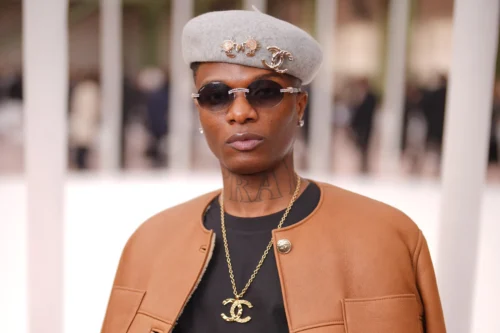
Wizkid doesn’t chase South African sounds; he waits for them to come to him, then drapes them in his signature cool. Where others bring noise and fireworks, Starboy arrives with silk vocals, understated swagger, and an almost telepathic sense of what makes a beat feel expensive. From early house-infused experiments to the amapiano-laced jewels of recent years, Wizkid’s South African collaborations are never forced; they’re inevitable, tasteful, and devastatingly effective. Every time he links with Mzansi talent (Black Coffee, DJ Maphorisa, Kabza De Small, or rising vocalists), the result is less a feature and more a quiet takeover: smooth, stylish, and sonically smarter than everything else in the room.
1. The Quiet Studio Alliance: DJ Maphorisa, Kabza De Small, and the Birth of Soweto Baby
Wizkid’s relationship with South Africa’s production royalty runs deeper than most public features suggest. For years, he has been a regular fixture in DJ Maphorisa and Kabza De Small’s Johannesburg studios, trading ideas long before the world hears the final product. The clearest proof is the certified hit song Soweto Baby, a record released in January 2016 to commercial success that immediately sent fans into meltdown with its perfect marriage of Wizkid’s buttery melodies and Scorpion Kings’ signature log drums and soulful chords. Beyond that single gem, Maphorisa has openly credited Wizkid with shaping parts of the Made in Lagos sound—those breezy, late-night tempos didn’t appear out of nowhere. This behind-the-scenes brotherhood means that even when Wizkid’s name isn’t on the marquee, South African DNA is quietly woven into his biggest albums, making him one of the most important silent architects of the amapiano-Afrobeats merger.
2. Energy (Stay Far Away): The Subtle South African Blueprint
Released as a standalone single in 2018, Energy (Stay Far Away) with Skepta felt like a pure London-Naija link-up on the surface, but South African ears recognized something else immediately: the laid-back tempo, the airy percussion, the almost conversational swing of the beat. That wasn’t a coincidence. By 2018, Wizkid had already spent countless nights in Cape Town and Joburg clubs absorbing the evolution from deep house into early amapiano. The track’s hypnotic groove and understated bassline were a direct nod to the slower, more sensual strain of South African dance music that Black Coffee and Culoe De Song had perfected years earlier. Energy became a quiet prophecy—two years before the world shouted “amapiano,” Wizkid was already speaking its language fluently, proving once again that his ear for the continent’s next wave is borderline psychic.
3. The Stage as Embassy: Bringing South Africa to the World’s Biggest Platforms
Wizkid doesn’t just borrow South African sounds; he repays the debt in real time, on the biggest stages imaginable. At his sold-out O2 Arena shows, he has repeatedly pulled out Kabza De Small, DJ Maphorisa, and amapiano vocalists like Young Stunna and Mas Musiq to perform in front of twenty thousand screaming fans who might never have heard a log drum otherwise. When he headlined Rolling Loud in Johannesburg, he turned the set into a continental summit, bringing out local heroes and letting amapiano breathe alongside “Essence” and “Ojuelegba.” These moments aren’t cameos—they’re coronations. Every time Wizkid hands the microphone to a South African act under those lights, he’s telling the world that the future of African music isn’t Lagos versus Joburg; it’s Lagos and Joburg sharing the same spotlight, with him as the effortlessly cool conductor.
What makes Wizkid’s South African chapter different is the absence of hustle. Where others arrive loud and declarative, Starboy glides in, listens, absorbs, and leaves with something that feels timeless rather than trendy. He never over-sings on a log drum, never forces a dance challenge—he simply lets the groove exist and drapes his velvet voice across it like cashmere. That restraint is the secret weapon: it turns potential experiments into classics. From the unreleased “Soweto Baby” gems to the way “Mood” or “Blessed” carry faint echoes of Black Coffee’s atmospheric house, Wizkid has created the smoothest, most refined bridge between Afrobeats and South Africa’s deep-house and amapiano heritage. In his hands, fusion doesn’t feel like a compromise; it feels like the most natural conversation two musical giants were always meant to have.
Why Do These Collaborations Matter?
These collaborations are not just hit records; they are the sound of a continent rewriting the rules of global pop on its own terms. When Burna Boy, Davido, and Wizkid (Africa’s three biggest commercial forces) choose to root themselves in South African studios, stages, and sounds, they do something historic: they collapse decades of imagined rivalry between West and South, replace it with partnership, and hand the world a new, unified African rhythm it cannot ignore. Every log drum that lands under a Nigerian hook, every Zulu or Setswana bar that rides an Afrobeats chorus, is a quiet act of reclamation: proof that African artists no longer need Western middlemen to validate or distribute their greatness. What we are witnessing is bigger than playlists; it is the birth of a self-confident pan-African popular music that belongs to Lagos and Johannesburg equally, and the rest of the planet is finally learning the dance.
1. They Provide a Perfect Market Symbiosis: Growth That Feeds Both Sides
The partnership is a masterclass in mutual upliftment. Nigerian superstars arrive in South Africa with millions of ready-made streams, radio dominance across West Africa, and a diaspora that stretches from Houston to Hamburg—resources that instantly catapult any local act into new territory. In return, South African artists offer the continent’s most sophisticated dance ecosystem: log-drum science, world-class producers, and a club culture that turns every release into a physical movement. When Focalistic or Musa Keys link with Davido, they don’t just get a feature—they inherit his entire West African and global streaming machinery. Conversely, when Burna Boy or Wizkid ride a Scorpion Kings beat, they tap into a rhythmic vocabulary that refreshes their sound and keeps them ahead of trends. It’s a closed-loop economy where both markets grow exponentially without cannibalising each other: Nigeria brings the numbers, South Africa brings the texture, and everyone eats.
2. The Birth of a Truly Globalized African Sound
Today’s biggest African records no longer sound like they come from one city, they sound like they come from the continent itself. The proof is in every global playlist: “Unavailable” layers Musa Keys’ Limpopo-born piano over Davido’s Lagos bravado; “Soweto” by Victony borrows Johannesburg log drums to tell a Naija love story; Tyla’s “Water” floats amapiano sensibility into American pop charts without ever losing its Pretoria accent. This isn’t dilution—it’s refinement. The melodies that once stayed in Lagos now ride basslines forged in Johannesburg studios, while the harmonic richness South Africans perfected in house and kwaito now carries Pidgin hooks to the world. The result is a seamless, borderless African pop dialect that Billboard, Spotify, and TikTok have no choice but to recognise as the new standard. For the first time, “African music” isn’t a catch-all marketing term—it’s an actual, identifiable sound, and these collaborations are its constitution.
3. They serve as Cultural Exchanges That Heals and Humanise
Beyond the charts, these records are quiet acts of diplomacy. Every time Cassper Nyovest trades Zulu bars with Burna Boy, every time Sha Sha’s ethereal Xhosa harmonies float under Wizkid’s Yoruba-laced crooning, stereotypes dissolve in real time. West Africans discover that South Africans don’t only make “shaye” music; South Africans realise Nigerians don’t only chase loud 808s. The collaborations force millions of listeners to confront the continent’s diversity in the most enjoyable way possible—through songs they already love. A teenager in Abidjan learns to pronounce “Ke Star” correctly; a club kid in Cape Town starts greeting people with “30BG!” The music becomes the classroom, the dance floor becomes the parliament, and old continental prejudices—xenophobia, superiority complexes, petty rivalries—are drowned out by shared basslines. Unity isn’t preached; it’s played at 110 BPM and sung in four languages at once.
4. Amapiano’s Rocket Fuel: How Afrobeats Giants Launched a Genre into Orbit
Without these Nigerian co-signs, amapiano would still be massive, but it would not be global at this speed. The genre’s worldwide explosion is inseparable from the moment Davido screamed “Aiii!” over Focalistic’s log drums, from Burna Boy blessing “Yaba Buluku” and “Jerusalema,” from Wizkid letting Kabza and Maphorisa lace his albums with their signature bounce. These weren’t charity features; they were calculated jet fuel. Each collaboration took a sound that was already dominating Southern Africa and strapped it to rockets aimed at every corner of the planet. Suddenly, Coachella, Tomorrowland, and BBC Radio 1 were forced to learn how to pronounce “piano.” South African producers who once prayed for 50,000 YouTube views now headline festivals because three Nigerian giants decided their beats deserved the world’s biggest speakers. Amapiano didn’t just rise—it was launched, and Burna Boy, Davido, and Wizkid were the countdown crew.
What’s Next: The Future of SA and Afrobeats Collabs
The future is already loading, and it sounds like log drums wrapped in Afrobeats horns. The next wave will push the Amapiano–Afrobeats fusion even deeper: expect entire albums built on the 110–115 BPM sweet spot, where Kabza De Small and Kel-P trade production credits, where Asake’s Yoruba chants float over Vigro Deep basslines, and where Tyla and Ayra Starr trade verses like sisters instead of guests. Producers from both regions are already swapping sample packs the way footballers swap jerseys; the hybrid is no longer an experiment—it’s the default setting. By 2027, the line between “amapiano song” and “Afrobeats song” will be academic; there will simply be African dance music, and it will own every summer globally.
South African rappers are done waiting for invitations. The blueprint laid by Focalistic, Costa Titch (RIP), and Blxckie has opened the floodgates: expect A-Reece on a Rema project, Nasty C headlining AfroNation Portugal alongside Omah Lay, and the new generation—Maglera Doe Boy, LucasRaps, and Priddy Ugly—dropping full Afrobeats-tinged tapes that slide effortlessly into Lagos playlists. Meanwhile, Nigerian rappers like Odumodublvck and Shallipopi are already borrowing amapiano drums and township slang, creating a two-way street where bars are traded like currency. The result will be a pan-African hip-hop dialect that speaks fluent street from Soweto to Surulere, with English, Pidgin, Zulu, and Igbo all sharing the same 16.
Albums themselves are about to become passports. The era of the solo regional project is giving way to deliberate pan-African statements: think a joint Davido and Cassper Nyovest tape, a Wizkid and Black Coffee producer album, or a surprise Burna Boy and Tyla duet project that flips between house, piano, and highlife without warning. Joint EPs are already in the works, rumoured Kabza De Small and Sarz, DJ Maphorisa and Pheelz, and they will drop like cultural summits rather than simple releases. At the same time, festival line-ups will read like continental reunions: one stage hosting Uncle Waffles into Asake into Major League DJz into Fireboy DML, with no genre breaks, just seamless African energy from sunset to sunrise.
The final frontier is the road. Shared tours are coming: Davido and Focalistic co-headlining arenas across Europe and North America, Burna Boy bringing the Scorpion Kings as his live band, Wizkid closing every show with a rotating cast of South African vocalists. New festival circuits are being planned, AfroNation Johannesburg, Piano People Lagos, a travelling “One Africa” caravan that hits ten cities in ten weeks. The crowds will no longer be Nigerian or South African; they’ll simply be African, waving both flags, screaming every lyric in every language. The new era is not about competition or even collaboration anymore, it’s about shared stages, shared fans, and shared identity. The continent has decided the future sounds better when we make it together.
Conclusion: A Continent United
The story of African music in the 2020s will not be told as a tale of individual kingdoms, but as the moment the continent chose unity over rivalry. South African artists and Afrobeats superstars (Burna Boy, Davido, Wizkid, and the constellations that orbit them) have turned what could have been polite diplomatic features into a full-scale cultural merger. They have taken the rolling log drums of amapiano, the melodic swagger of Afrobeats, the lyrical bite of South African hip-hop, and the harmonic depth of Afro-soul and house, and woven them into a single, unmistakable fabric. Every “Unavailable,” every “Ke Star,” every late-night Scorpion Kings session with a Nigerian guest is a brick in a new monument: a pan-African popular music that no longer asks permission from London or Los Angeles to exist.
The proof is in the numbers, but more importantly, it is in the feeling. A song born in a Limpopo bedroom can now headline Madison Square Garden because a Lagos superstar decided it deserved the stage. A producer from Pretoria can wake up to a platinum plaque because a Port Harcourt giant rode his beat to a billion streams. Festivals that once booked one African headliner now book five, and the crowd knows every word whether the hook is in Zulu, Pidgin, or Yoruba. The diaspora no longer has to choose between waving the Nigerian or the South African flag; they wave both, because the music has taught them that both belong to them. This is not charity or clout-chasing; it is the most successful economic and artistic partnership the continent has ever engineered.
What these artists have built is bigger than any single genre label. Amapiano is no longer just South African, Afrobeats is no longer just Nigerian, and the hybrid that has emerged is not a compromise; it is an upgrade. It is the sound of a continent that finally trusts its own ears, its own rhythms, its own voices. When Tyla and Ayra Starr trade verses, when Kabza De Small and Sarz swap stems, when Blxckie and Odumodublvck spit over the same log drum, they are not crossing borders; they are erasing them. The world has been forced to learn a new dance, and the teachers are all African, standing shoulder to shoulder, smiling because they know the lesson was written together.
The ripple effects will outlive every artist reading these words today. The next generation (from bedroom producers in Kumasi to teenage rappers in Durban) will grow up knowing that reaching across the continent is the default, not the exception. They will inherit playlists where “African music” is not a niche category but the centre of gravity, where a log drum and a talking drum can live in the same bar without apology. The infrastructure is already in place: the studios, the labels, the festivals, the algorithms, the audiences. All that was needed was the decision, and Burna Boy, Davido, Wizkid, Focalistic, Musa Keys, Tyla, and hundreds more made it together.
This is only the beginning. The collaboration between South African artists and Afrobeats superstars has not just redefined African music; it has redefined what the world thinks music can be when a continent decides to speak with one voice and many accents. The borders are gone, the flags are intertwined, and the sound is unstoppable. African music is no longer coming; it has arrived, and it arrived holding hands. The rest of the planet is finally catching up to the rhythm we have been dancing to all along.